Seville by High-Speed Train: The Overnight That Beat the Drive
Quick Verdict: Is the Seville Overnight Worth It?
Yes, and specifically as an overnight rather than a day trip. From a base on the Costa del Sol, Seville is close enough to reach easily and far enough that turning around the same day wastes the best part of it.
How we did it: drove to Malaga, parked at the train station, took the high-speed train, one night in the city center, train back the next morning.
Best for: anyone who wants one real city on an otherwise beach-and-white-towns trip.
The honest caveat: it is hot. The coast has a breeze. Seville does not.
This was the one part of our two weeks where we left the car behind, and it was the right call.
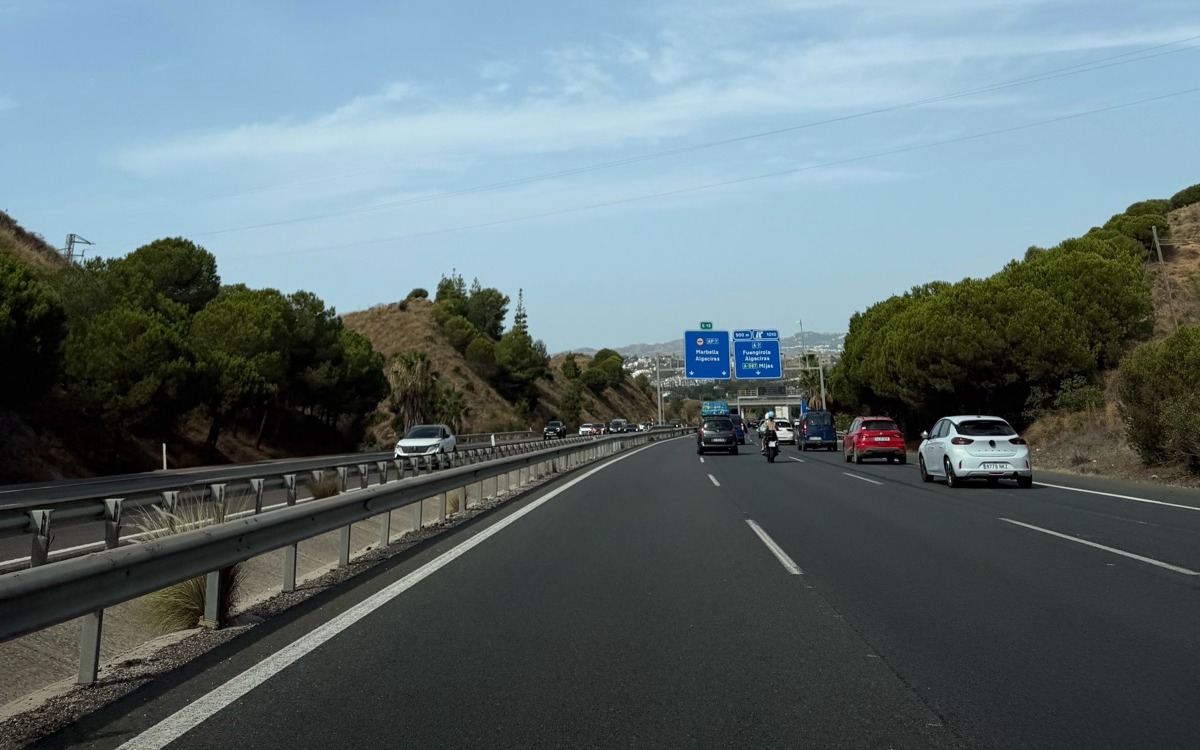
We drove back up to Malaga, parked at the train station, and took the high-speed train to Seville. It was about two hours each way, against roughly three hours each way by car. That is two hours saved on the day, but the real win is that nobody had to drive into an unfamiliar city, find parking, or worry about the car overnight.
Why the train wins, beyond the clock
The hour saved each way is the obvious argument, and it is not the best one. The better ones:
You arrive rested. Spanish high-speed rail is genuinely comfortable, and two hours in a seat you can read or nap in is not the same as two hours concentrating on a road. On a trip where you are driving most other days, one day off from the wheel matters more than the math suggests.
City parking becomes somebody else’s problem. We had already learned what Spanish garages do to a rental car (in some detail), and Seville’s historic center is a maze of narrow one-way streets with restricted-access zones. Driving in and finding somewhere to leave a car overnight is a genuinely annoying way to start a short trip.
The station-to-center leg is easy. Seville’s station is close enough to the historic center that a cab is a short ride. With luggage, on a hot day, that is exactly what you want.
It scales to the group. Three of us on a train is three of us who can all look out the window. Nobody drew the short straw.
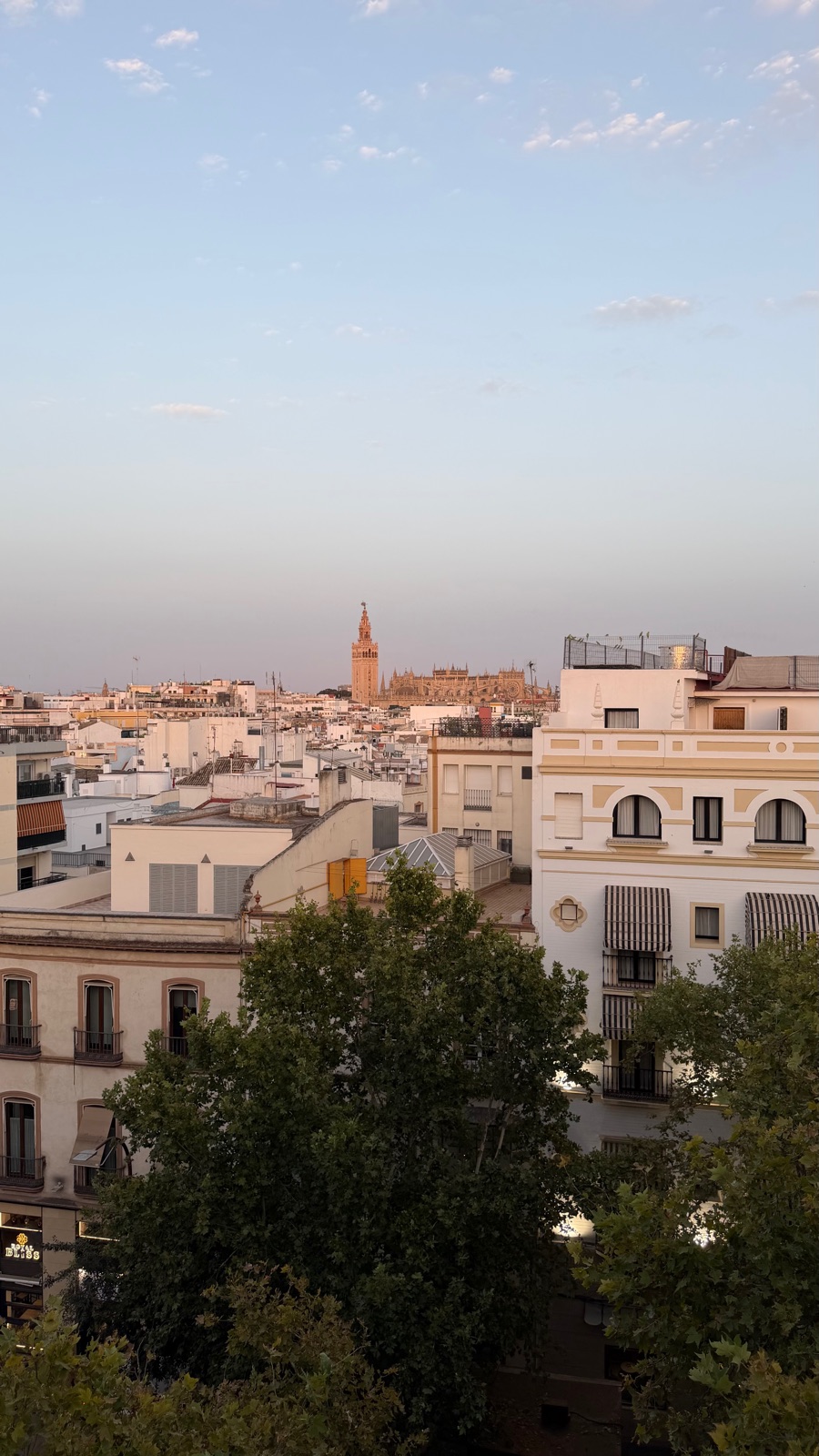
We arrived, took a cab to our hotel in the historic center, and started walking.
Get a hotel in the historic center. It is load bearing.
We stayed at Hotel Bécquer, in the historic center, and where you sleep matters more here than it does on most trips.
Seville in July is genuinely hot, and we had an 11-year-old with us. Being able to walk back to the hotel in ten minutes, rather than negotiating a cab or a metro after a long hot day, is what made the rest of the plan work. More on that in a moment.
The cathedral and the Alcazar, booked in advance
We had a tour booked for the afternoon that included the cathedral, the Giralda, and the Alcazar with tickets, and booking ahead is the practical advice I would give anyone.
These are the two busiest sites in Seville. Turning up and hoping is how you spend an hour of a hot afternoon standing in a queue instead of inside a building.
Before the tour we had lunch at one of the tapas restaurants right in front of the cathedral, which was as good as everything else we ate in Spain.
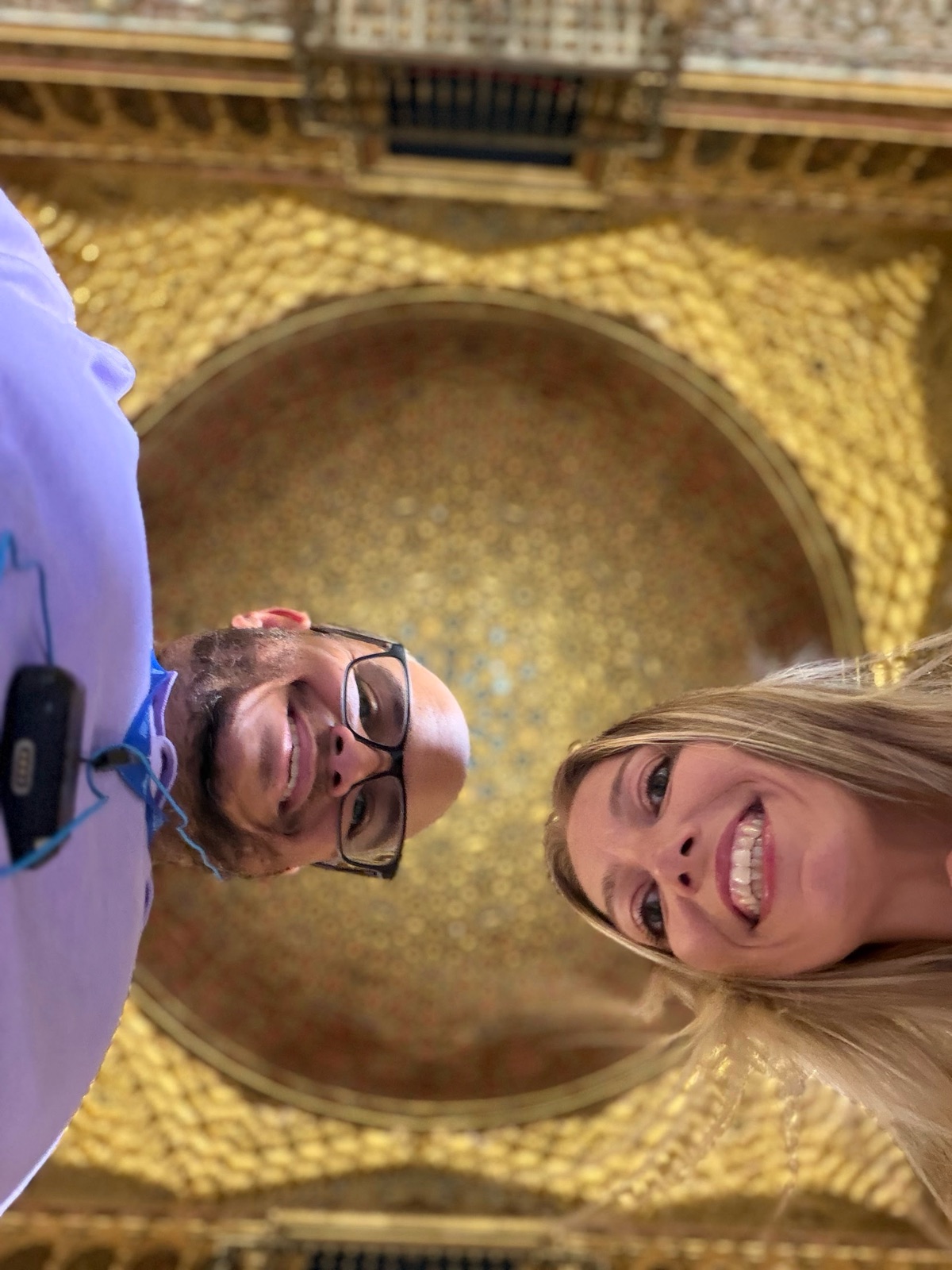
The Alcazar was the highlight. The rooms, the tilework, the gardens. We could genuinely have spent the entire day in there, and if I were planning it again I might give it more time than a tour allows.
If it looks familiar, that is because this is where Game of Thrones filmed the Water Gardens of Dorne. The production used the Alcazar across Season 5 and into Season 6, and reportedly had to change very little, because the courtyards, reflecting pools, orange trees and tiled halls already looked like the world they were building. Standing in the gardens, you can see exactly why they picked it. It is also, for the record, a UNESCO World Heritage site and the oldest royal palace still in use in Europe, which is the kind of detail that lands better in person than on a plaque.
We also went up the tower at the cathedral, and Abby made it about halfway before deciding she was done. That is worth knowing if you are traveling with kids: it is a real climb, and there is no shame in tapping out. She is not the only 11-year-old who has.
Seville at night is the whole point
Everything they say about this is true. The city changes after dark.
After the tour we went back to the hotel to clean up. Then Ashley and I went out alone, strolled into the center, and had dinner at La Malvaloca, near Las Setas.
This is where the city-center hotel earns its keep. Abby had had enough of the heat and stayed back, and because we were a short walk from everything, that was a simple decision rather than a logistical problem. On a trip like this, having a base you can retreat to and return from is what lets a family do a night out at all.
The Triana morning
The next morning we walked over the bridge to Triana, the neighborhood across the river, for the market and breakfast at a local place. Both delivered.
Triana is the right call for a second morning precisely because it is not a monument. It is a working neighborhood with a ceramics tradition and a market that locals actually shop in, and after an afternoon of ticketed sites it is a relief to walk somewhere with nothing to queue for. The bridge across is short and the views back toward the city are worth the stop.
We took photos on the bridge, walked back to the hotel for our luggage, and headed to the station. That is a good shape for a Seville morning: something local and unhurried, no ticketed sites, no rush, and no risk of missing a train because a queue ran long.
Doing this with a kid, honestly
Seville with an 11-year-old in July is a real planning problem, and pretending otherwise helps nobody. Two things made it work.
The first is the hotel location, which I have already made a fuss about and will make one more time. Everything we did was within a walk of where we slept, so “I am done” never became a logistics crisis. It just meant walking back.
The second is lowering the bar for what counts as a win. Abby got the cathedral, the Alcazar, half a tower, a market, and a bridge. She did not get a night out, and she did not need one. On a longer trip you are not trying to make every person do every thing, you are trying to make sure nobody has a bad day.
A few things I would tell a parent specifically:
- The Alcazar is the kid-friendly one. Gardens, courtyards, water, shade, and rooms that genuinely are a film set, since Game of Thrones shot Dorne here. If you only get enthusiasm for one site, spend it here, and the Thrones angle is a useful hook for an older kid or teen.
- The tower is optional. It is a genuine climb. Abby tapped out halfway and that was fine.
- Build in an afternoon reset at the hotel between sightseeing and dinner. In July it is not indulgent, it is what makes the evening possible.
- Evening is the kid-friendly time of day in a Spanish city. Everything is cooler, the streets fill up, and late dinners are normal, so a child being out at 9pm is unremarkable rather than a spectacle.
Timing: what I would tell a client about when to go
We went in July because that is when our trip was. I would not recommend July to anyone with a choice.
Seville is one of the hottest cities in Europe in high summer. The coast we came from has a sea breeze that keeps the afternoons livable, and Seville has nothing of the kind. It is a city built to be walked, and in July the walking hours are essentially early morning and after dark.
If you can pick your month, spring and fall are the answer, when you can be outside all day and the evenings are still warm. If you are locked into summer, the workaround is the one we used without planning it: front-load the indoor and ticketed things, take the middle of the day slowly, and let the city come back to you in the evening.
Either way, one thing does not change: an overnight beats a day trip in every season. The difference is that in cooler months you get more usable daylight on both ends.
How long the sites actually take
This is the planning detail most itineraries get wrong, so here is a realistic shape for one night:
- The cathedral and the Giralda: allow around two hours together. The cathedral is vast, and the tower is a climb that takes longer than people expect, particularly with kids or in heat.
- The Alcazar: budget more than you think. Two hours is a brisk visit. The palace rooms alone can absorb an hour, and the gardens deserve their own. We could have spent the day there, and it is the one place I would go back to with no schedule at all.
- Walking the center: this is not a scheduled activity, it is what fills the gaps. The historic center is compact and the pleasure of it is being unhurried.
Which means an afternoon of ticketed sites plus an evening out plus a slow morning is genuinely a full, satisfying one night. Trying to add a third major site is how the trip starts to feel like homework.
What we did not get to, and would add with a second night
We had one night and used it well, but Seville has more than one night’s worth. If you have two, here is where I would put the extra day:
- Plaza de Espana, the enormous semicircular plaza in Maria Luisa Park. It is free, it is spectacular, and it photographs like nowhere else in the city. Early morning is the time.
- More Alcazar. I am repeating myself on purpose.
- Las Setas, the modern wooden structure near where we had dinner. There is a walkway across the top with city views, and it is a complete contrast to everything else you will see that day.
- A flamenco show. Seville is the home of it, and it is the obvious thing to build a second evening around.
None of that is a criticism of the one-night version. It is the honest answer to “should I stay longer,” which is: yes if you have it, but do not skip Seville because you only have one night.
What I would tell someone planning this
- Take the train. Park at Malaga station and let someone else drive.
- Stay in the historic center. It is what makes the split evening possible.
- Book the cathedral and Alcazar in advance. July queues are not a challenge worth accepting.
- Do the heavy sightseeing in the afternoon and save the walking for the evening, because the temperature difference is real.
- Take a cab from the station. It is a short ride, you will have luggage, and it is not the moment to be clever.
- Give the Alcazar more time than the tour allows if you can, or go back in the morning.
- One night is enough, but do not try to do it in zero.
- Go in spring or fall if you have the choice, and accept the heat as the price if you do not.
Next in this series: Gibraltar, the Rock, and seven miles of walking I would not repeat the same way.
Building a Spain trip that mixes coast, white towns, and one real city? That is exactly the kind of itinerary we plan. Email me at [email protected].
A quick note: this post includes an affiliate link to the Viator tour we actually booked. If you book through it, we may earn a small commission at no extra cost to you, and we only link to tours we did ourselves. See our affiliate disclosure.
We booked the Monuments of Seville: Cathedral, Alcazar and Giralda with Tickets tour through Viator.